Afro-Caribbean Business Network | Fireside Chat with Dr. Trevor Charles, Lanterna Black Innovation Hub | Friday, October 2, 2026 | Online
Most entrepreneurs do not fail simply because of a bad idea. Instead, they stall because they are building alone, without the mentors, networks and capital that other founders take for granted.
That is why Black innovation in Canada needs more than talent. Above all, it needs infrastructure: places where Black founders, scientists and professionals can meet, learn and get resourced. After all, when the room is built for you, the path gets clearer.
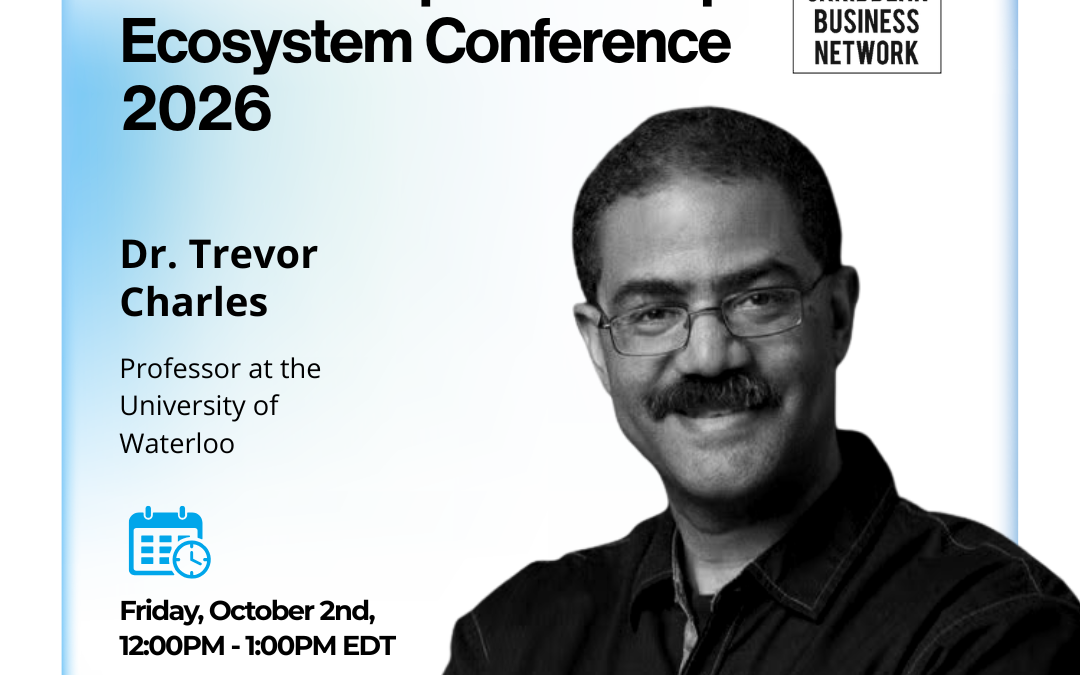
So on Friday, October 2, Day 2 of the Black Entrepreneurship Ecosystem Conference 2026 brings that conversation to life. The Afro-Caribbean Business Network is hosting a virtual fireside chat with Dr. Trevor Charles, a scientist, serial founder and the builder behind the Lanterna Black Innovation Hub (LBIH).
Who Is Dr. Trevor Charles?
Trevor is a Professor of Biology at the University of Waterloo, where he has taught and led research for more than 25 years. Originally from British Columbia, he first studied microbiology at UBC and earned his PhD in molecular biology at McMaster University. Later, he completed a postdoctoral fellowship at the University of Washington and joined the faculty at McGill University before moving to Waterloo.
Today, he directs the Waterloo Centre for Microbial Research and has served as president of the Canadian Society of Microbiologists. In particular, his work focuses on the circular bioeconomy, including turning food waste into biodegradable plastics, breaking down plastic waste and monitoring pathogens in wastewater. Moreover, he has used machine learning and AI alongside DNA sequencing for more than 15 years.
However, Trevor is not only a researcher. He is also a builder. For example, he founded Metagenom Bio Life Science, a biotech company specializing in DNA sequencing for microbiome research. In addition, he has served as Chief Science Officer of Earth Microbial and founded Healthy Hydroponics, which monitors pathogens on hydroponic farms.
Then, in 2025, he received the inaugural Wiley Research Heroes Prize, selected from 1,713 nominees worldwide. He also sits on the steering committee of the Canadian Black Scientists Network.
Inside the Lanterna Black Innovation Hub
More recently, Trevor built the Lanterna Black Innovation Hub, which is based in Waterloo Region and serves Black innovators across Canada. Fittingly, its tagline says it all: “Innovation unlocked. Powered by perspective.”
According to LBIH, the hub’s vision is a future where Black innovation and excellence are “supported, resourced, and celebrated.” To get there, LBIH works across four pillars:
- Community and ecosystem connectivity: convenings and knowledge-sharing across the region
- Innovation and entrepreneurship support: resources, mentorship and strategic partnerships for sustainable growth
- Capital and funding access: pathways that connect Black-led ventures to funding, including the LBIH Fund
- Skills and leadership development: investment in business, technology, social impact and leadership
In practice, that looks like Fridays After 5 (FA5), a weekly gathering where Black students, faculty and professionals connect and pitch ideas. Similarly, there is BRIDGE, an annual flagship event that connects founders with investors. On top of that, LBIH runs a founder bootcamp with digital growth services and a mentorship program that pairs Black high school and university students with Black founders and researchers.
To date, the hub reports reaching 1,000+ community members, delivering 50+ programs and experiences, supporting 113+ founders and professionals and building 30+ partnerships with organizations such as TD, Scotiabank and the University of Waterloo.
The LBIH program has been eye-opening. It expanded my focus beyond technical work to strategy, marketing, and networking. (Dr. Ifeoma Abajue, LBIH participant)
Why This Conversation Matters for the Black Community
1. Representation changes what our children believe is possible
Trevor has said it plainly, and often: “People need to see themselves reflected at work and in leadership positions.” So when a Black scientist runs a biotech company and mentors the next generation, young people see a future in STEM that they may never have been shown. As a result, more future Black founders will be scientists, engineers and inventors.
2. Innovation can be our next frontier
At ACBN, we talk about the Four Strikes™ that hold Black entrepreneurs back: small teams, difficulty attracting talent, overconcentration in professional services and systemic barriers to capital, credit and networks. Notably, the third strike is where Trevor’s work hits hardest. Specifically, by pulling Black talent into technology, research and science-based ventures, hubs like LBIH help diversify what our community builds and owns.
3. Researchers and professionals are founders too
Unfortunately, many Black professionals hold ideas, patents and expertise that never reach the market. Thankfully, that is exactly the gap LBIH is closing. For instance, just like Dr. Abajue, participants learn that strategy, marketing and networking matter as much as technical skill. In other words, the step from expert to entrepreneur is learnable.
4. Ecosystems beat isolation
Of course, no single organization can do it all. Indeed, that is the whole idea behind this conference. Just as LBIH connects founders with mentors, investors and institutions, ACBN’s 3C Framework™ moves entrepreneurs through Clarity → Connection → Capital. First, you get clear on what your business needs. Next, you connect with the community and partners who can help. Finally, you access capital that is built for your stage.
Ready to put the 3C Framework™ to work in your business? ACBN’s Growth Pathway program walks you from clarity to capital with coaching, community and a direct route to funding. We are welcoming 100 entrepreneurs into the program.
5. Giving back multiplies the impact
Admittedly, Trevor could easily have stayed in his lab. Rather, he keeps choosing to build pathways for others, from the Canadian Black Scientists Network to LBIH. As he put it, “What we do as researchers or scientists is for the greater good of society.” Ultimately, that spirit of building for the community is how generational wealth gets created.
What You Will Walk Away With
- How innovation hubs help Black founders and professionals grow faster
- Lessons from moving research out of the lab and into the market
- How to tap into mentorship, investor connections and funding pathways
- Why Black representation in science and innovation matters for our economy
- A live Q&A with a scientist, founder and ecosystem builder
Frequently Asked Questions
What is a Black innovation hub?
In simple terms, a Black innovation hub is a community and support centre for Black founders, researchers and professionals. Typically, it offers mentorship, skills training, networking events and connections to funding and investors, all designed around the realities Black innovators face.
Where can Black entrepreneurs in Ontario get support?
In fact, there are more options than many people realize. For example, the Lanterna Black Innovation Hub serves Black innovators in Waterloo Region and beyond. Meanwhile, in the Greater Toronto Area, ACBN’s Growth Pathway program offers coaching, community and a path to capital, including ACBN microloans of $1,000 to $10,000.
I missed the live session. Can I watch the replay?
Yes. Replays of BEEConference sessions will be shared on the ACBN YouTube channel.
Join Us on Day 2
Beyond this session, Day 2 continues a full month of workshops through October as part of the Black Entrepreneurship Ecosystem Conference 2026. So whether you are a founder, a researcher or a professional with an idea, this conversation will show you what is possible when the right support is in place.
Fireside Chat with Dr. Trevor Charles | BEEConference Day 2
Friday, October 2, 2026 | Online
Can’t make it live? Subscribe to our YouTube channel so you never miss a replay, workshop or conversation: youtube.com/@acbn_canada
Connect. Build. Grow.